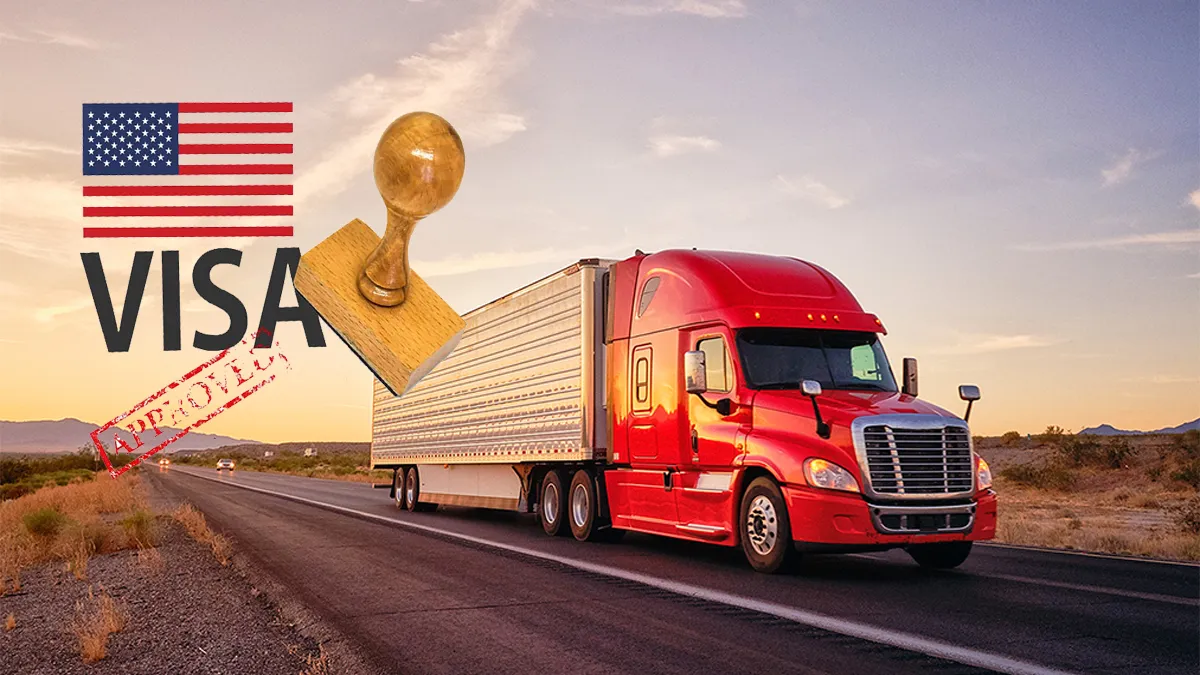
Canada is moving, and trucks keep everything rolling. If you are a skilled driver or ready to train up, this is your moment. Truck driver jobs in Canada are in high demand across provinces in 2026 and 2027, with thousands of openings for long-haul, regional, and local routes.
--Advertisement--
Foreigners are welcome. Many verified Canadian employers actively recruit internationally and provide Visa Sponsorship under the Temporary Foreign Worker Program. Employers must pay the LMIA fee, so it is a Free LMIA for you. With the right license, clean record, and willingness to work, you can land a stable job, arrive on a work permit, and build a pathway to permanent residency.
This guide shows you exactly how to find genuine openings, meet the requirements, secure sponsorship, and apply the right way.
Why Truck Driver Jobs Are Booming in Canada in 2026/2027
Canada faces a sustained driver shortage as freight volumes grow and many experienced drivers retire. Provinces like Ontario, Alberta, British Columbia, Saskatchewan, and Manitoba continue to report vacancies in transport and logistics. E-commerce, construction, agriculture, and manufacturing rely on reliable transport truck drivers to move goods safely and on time.
Because the shortage is national, employers broaden hiring to international candidates. If you meet safety and licensing standards, your application can stand out. Many carriers offer onboarding training, safety programs, and support with immigration paperwork to get you on the road fast.
Job Overview
Key Detail
What You Need to Know
Role
Transport Truck Driver – Long-haul, Regional, Local, Flatbed, Reefer, Dry Van, Tanker
NOC
73300 Transport truck drivers
Locations
Nationwide: Ontario, Alberta, British Columbia, Saskatchewan, Manitoba, Quebec, Atlantic provinces
Visa Sponsorship
Yes, via Temporary Foreign Worker Program with LMIA; some applicants may later transition to PR via PNP, Express Entry, or Atlantic Immigration
LMIA
Employer must obtain a positive LMIA and pay the fee – not charged to you
Education
Typically secondary school
Experience
Varies by employer; some accept new drivers after MELT training, others require 6-24 months
License
Canadian Class 1 or A (air brake endorsement). Foreign license plus road test and provincial licensing on arrival
Language
Basic English or French; many immigration streams accept CLB 4-5
Pay Type
Hourly, per mile/kilometer, or trip rate; overtime and safety bonuses common
Shifts
Days, nights, weekends; long-haul often multi-day trips across provinces or into the USA
What You Will Do
Operate tractor-trailers and straight trucks safely in all weather conditions
Complete pre-trip, en-route, and post-trip inspections; report defects
Load, secure, and unload cargo; verify documentation and weights
Plan routes and meet delivery schedules within Hours of Service rules
Use ELDs to maintain accurate logs and compliance records
Communicate with dispatch, shippers, and receivers professionally
Perform basic maintenance and report mechanical issues promptly
Follow TDG and WHMIS rules when hauling hazardous goods
Provide excellent customer service at pickup and delivery points
Salary and Benefits
Compensation varies by province, route type, and equipment. Many carriers pay by the hour or per mile with performance, safety, and fuel efficiency bonuses. Long-haul trips can include layover pay and per diem. Benefits often include health and dental plans, paid training, uniform or PPE, and retirement contributions. Some employers offer housing assistance or a relocation allowance for newcomers. Confirm pay structure in your job offer before you accept.
Requirements and Eligibility
Valid passport and ability to qualify for a Canadian work permit
Clean driving record and recent driver’s abstract
Secondary school education or equivalent
Canadian Class 1 or A license with air brake endorsement; MELT training where required by province
Recent verifiable driving experience if requested by the employer or insurer
Ability to lift and secure loads, and to work flexible hours
Criminal record check; medical exam as required
Basic English or French for safety and communication on the job
Tip: Some provinces accept new drivers who complete Mandatory Entry-Level Training in Canada. Others and many insurers prefer 6-12 months of recent commercial experience. Be upfront about your experience when you apply.
Visa Sponsorship and LMIA Explained
To hire you from overseas, a Canadian employer usually uses the Temporary Foreign Worker Program. The employer applies for a Labour Market Impact Assessment to show no Canadian worker is available. By law, the employer pays the LMIA fee and cannot charge it back. That means a Free LMIA for you if hired.
Step 1 – Employer gets LMIA: The employer submits the LMIA and receives a positive decision with a job offer letter.
Step 2 – You apply for a work permit: Use the LMIA and job offer to apply online. Provide biometrics, police checks, and medical if required.
Step 3 – Arrive and start work: On approval, you receive a work permit tied to the employer. You complete provincial licensing and any road tests.
Pathways to permanent residence after you gain Canadian experience can include Provincial Nominee Programs for truck drivers, Express Entry categories that accept NOC 73300, and the Atlantic Immigration Program for eligible employers in Atlantic provinces.
How to Apply
Prepare your documents: Passport, CV in Canadian format, driver’s abstract, reference letters, training certificates, and any safety tickets.
Target the right roles: Search for NOC 73300 transport truck driver jobs. Prioritize verified employers who mention Visa Sponsorship or LMIA.
Apply smart: Tailor each application. Highlight safe driving, clean record, on-time delivery, equipment handled, and long-haul readiness.
Ace the interview: Be ready to discuss Hours of Service, ELD use, winter driving, and route planning. Keep answers practical and safety-focused.
Confirm sponsorship: Ensure the employer will obtain an LMIA and pay all required employer-side fees. Get your offer in writing.
Work permit filing: Submit your online work permit application with LMIA, job offer, proof of experience, police clearance, and medical if needed.
Get licensed on arrival: Complete any provincial testing for Class 1 or A and air brake endorsement. Arrange MELT if required.
Find Real Openings: Job Bank Canada
Job Bank is Canada’s official job board with verified postings, including many for transport truck drivers. Use filters to find sponsorship-friendly roles.
Search by NOC 73300 and keywords like transport truck driver or long-haul driver
Filter by employer: Verified employer and Foreign candidates can apply if available
Check locations with high demand: Ontario, Alberta, BC, Saskatchewan, Manitoba
Large distribution hubs around the GTA, Windsor, London, and Ottawa drive steady demand for long-haul and regional runs. Many carriers recruit internationally and offer training pathways.
Alberta
Energy, construction, and agriculture keep freight moving year-round. Expect long-haul routes, winter road conditions training, and competitive bonuses.
British Columbia
Would You Like To Apply For This Jobs/Sponsorship?
Enter Your Email Address HERE & You Will Receive a Notification About Your Application. If it shows "Subscribed" CLICK HERE to follow on Telegram for updates
Port operations and mountain corridors need skilled drivers comfortable with grades and weather. Safety and mountain driving experience are valued.
Saskatchewan and Manitoba
Prairie provinces hire for grain, reefer, and flatbed. Some provincial programs make it easier to transition to PR after working with a designated employer.
Quebec and Atlantic Canada
Bilingual drivers have an advantage in Quebec. In Atlantic provinces, the Atlantic Immigration Program can streamline PR with participating employers.
Other Sources to Find Truck Driving Jobs
Indeed, LinkedIn, Glassdoor, Workopolis – search for NOC 73300 and filter Canada-wide
Carrier websites – apply directly to mid-sized fleets that list LMIA support
Provincial trucking associations – member directories often link to hiring pages
Licensed recruiters – use only Canada-licensed agencies and avoid any who ask you to pay employer fees
Networking – join trucking groups and forums where employers post urgent routes
Why Trucking Is a Strong Career in Canada
Trucking is essential, resilient, and offers clear progression. Start with team or company driver roles, then move to higher-paying specialized equipment or regional dedicated lanes. With experience, you can step into trainer, dispatcher, or owner-operator paths. Most importantly, many immigration routes recognize this occupation for long-term settlement.
Common Mistakes to Avoid
Paying for LMIA – illegal. Employers must pay LMIA fees
Applying without a tailored CV – generic applications get ignored
Ignoring licensing – plan for Class 1 or A and MELT where required
Overlooking insurance requirements – some fleets need minimum experience
Not verifying the employer – always confirm they are genuine and authorized to hire foreign workers
FAQ
Can I get a truck driver job in Canada without Canadian experience?
Yes. Many fleets hire international drivers, especially if you complete MELT in Canada or have recent verifiable overseas experience. Insurance rules may require a minimum number of months. Be clear about your driving history and equipment handled.
Do employers really sponsor with LMIA?
--Advertisement--
Yes, many do. The employer must obtain a positive LMIA and pay the fee. You then use the LMIA to apply for a closed work permit. Never pay employer-side fees yourself.
What license do I need?
You will need a provincial Class 1 or A with air brake endorsement. If you hold a foreign commercial license, you will still need to pass provincial tests and, in many provinces, complete Mandatory Entry-Level Training.
Is IELTS required for truck drivers?
For work permits, language tests are not always mandatory, but basic English or French is essential for safety. For permanent residence programs, a language test such as IELTS General may be required, often CLB 4-5 or higher depending on the stream.
Can I bring my family?
Often yes. Depending on your program, your spouse may qualify for an open work permit, and your children can study in Canada. Check the latest IRCC rules when you apply.
How long does processing take?
Timelines vary by country and program. Allow time for LMIA issuance, biometrics, and work permit processing. Start early and submit complete documents to avoid delays.
Ready to Apply?
Skilled drivers are urgently needed across Canada in 2026 and 2027. If you have a clean record, the right attitude, and you are ready to work, this is your chance. Target verified employers, insist on Free LMIA, and follow the steps in this guide. Apply now, get your work permit, and start your Canadian trucking career.